A dishwasher is considered one of the most important kitchen appliances for homeowners. It allows you to save time, makes the process of manual washing more comfortable and keeps the kitchen clean after a meal. But there are still many people who do not know what actually happens in the dishwasher while cleaning the dishes.
Understanding the work process will allow you to use your device properly, identify possible problems in time and maintain its performance in excellent condition. Filling the washing basin with water, washing dishes with detergent and drying – all processes have their own meaning. And for residents of Danville, CA, it will be helpful to know at least the basic principles of work of their appliance.
What Happens Inside a Dishwasher During a Cleaning Cycle?
A dishwasher goes through certain processes in order to clean your dishes. Despite variations in cycle settings and other features among different brands, the following is how a typical dishwasher operates.
Knowing the different stages of dishwasher operations will enable you to be aware of what should take place during a normal washing process.
1. Water Filling
Once the dishwashing cycle is started and the door is shut, the first thing that the dishwasher will do is allow water to come into the tub. There is a valve for controlling the water inlet from the house plumbing system.
The dishwasher does not fill itself up with water. It fills itself with a certain quantity of water that gathers at the bottom part of the tub.
2. Water Is Heated to the Right Temperature
When the dishwasher is filled with water, it heats it up to the necessary temperature for the chosen program.
Warm water helps dissolve dried food residues, greasy substances, and other debris on dishes. It also improves the effectiveness of dishwasher detergent.
Some dishwashers heat the incoming water; some use a mixture of warm water from the household supply and heat.
3. Detergent is Released into the Dishwasher
The detergent dispenser can be located inside the door of the dishwasher. During the correct time, this dispenser will open and release the detergent.
Detergent mixes with water and removes greasy and other deposits, as well as food leftovers. The dishwasher detergent is designed specifically for this type of appliance, so regular dish soap is not suitable here.
4. Spray Arms Sprinkle Water Around Dishes
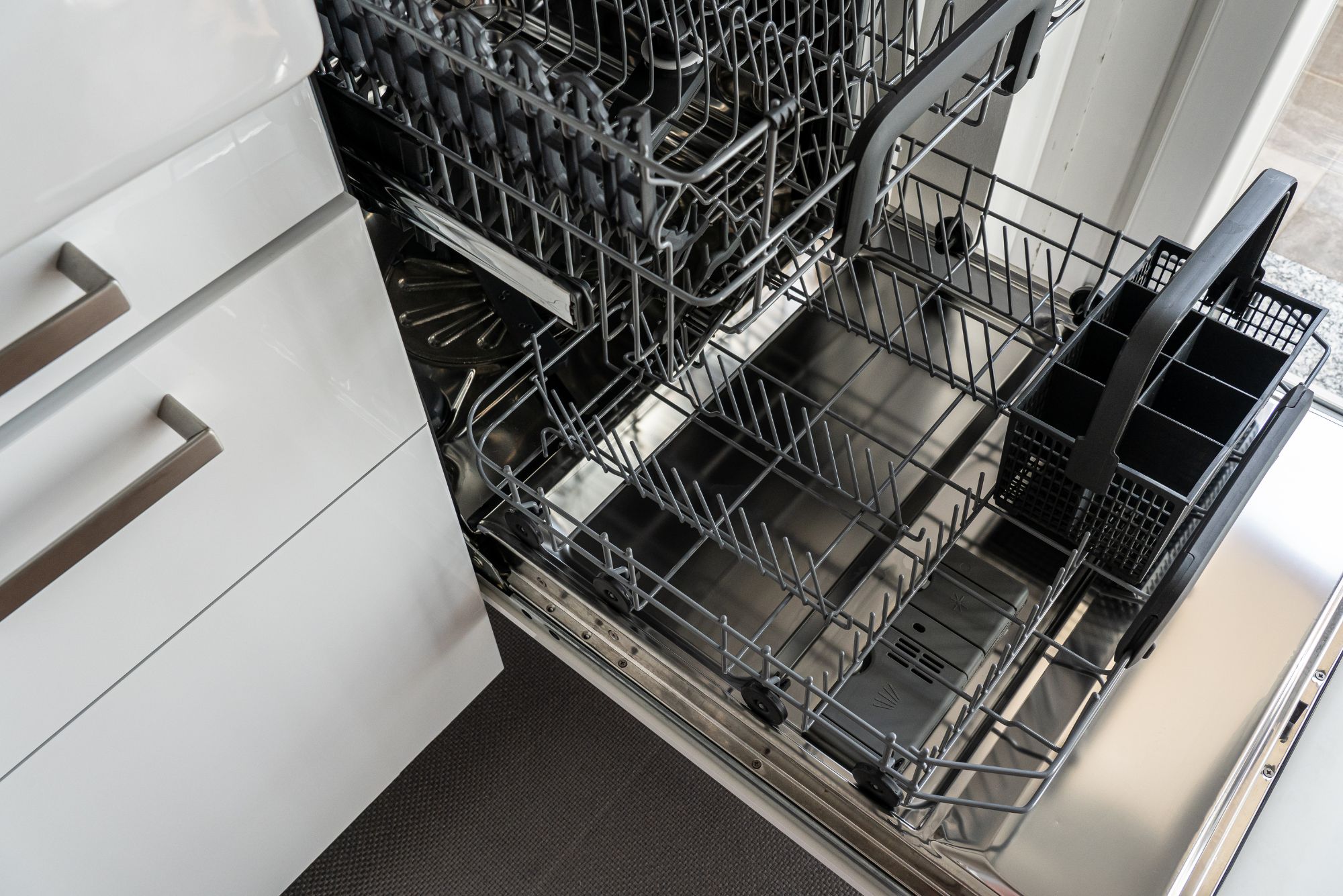
The circulation pump forces the water through the spray arms, having small holes, from which water will be released.
Water pressure allows for rotating the spray arms and sprinkling water around the upper and lower racks. In this way, the cleaning liquid will reach all surfaces of your dishes.
Spray arms play a vital role in dishwasher performance since any clogged holes may interfere with the water flow.
Important Parts That Help a Dishwasher Run Properly
There are many parts found in a dishwasher. They all work together to accomplish the task. The failure of one part could mean that the dishwasher won’t clean, drain, or dry dishes properly.
Below are some examples of parts found in a dishwasher.
| Dishwasher Part | Main Function |
|---|---|
| Water Inlet Valve | Controls the water entering the machine. |
| Heating Element | Heats water and supports the drying process in some models. |
| Detergent Dispenser | Releases detergent during the wash cycle. |
| Circulation Pump | Moves water through the spray arms. |
| Spray Arms | Distribute water across the dishes. |
| Filter | Collects food particles and debris. |
| Drain Pump | Removes used water from the machine. |
| Control Board | Manages the selected cycle and appliance functions. |
| Door Latch | Keeps the door securely closed during operation. |
Why the Filter Is Important
The dishwasher filter collects food particles that are released while washing dishes. It ensures that no matter accumulates and recirculates on the dishes again.
Gradually, food particles, fat deposits, and other residues will accumulate in the filter. In case of clogging of the dishwasher, the user will be able to detect bad smell, poor performance, or accumulation of water.
How the Rinsing and Drying Stages Finish the Job
Dishwasher work does not end with cleaning. Having cleaned food particles and grease, the appliance has to wash off the detergent and dry dishes.
Draining of Dirty Water
Upon completion of the primary wash cycle, the dishwater drains the dirty water. Food particles trapped by the filter leave the appliance together with the water via the drainage system.
Dirty water leaves the appliance through the drain pump and drain hose, which is typically connected to the kitchen water supply.
If the filter, drain hose, or drain pump is clogged, the dishwasher will not be able to drain the water.
Rinsing Dishes with Clean Water
Having drained the dirty water, the dishwasher introduces clean water for rinsing.
Water moves through the spray arms and washes away the remaining detergent and cleaning particles. In case of certain settings, the dishwasher will wash and rinse again.
The Drying Process Eliminates Moisture
The last process allows the elimination of moisture from plates, glasses, and cutlery.
Some dishwashers have a built-in heater that facilitates the process of drying. Other machines have fan drying, condensation drying, or special drying systems.
The efficiency of drying is defined by the type of machine, selected setting, and washed dishes.
Common Dishwasher Problems and What They May Mean
Understanding how dishwashers operate will help you detect when things are not running properly. A slight drop in cleaning effectiveness is an indication that there is an issue with water flow, drainage, heating or other parts of the machine.
Here are some of the most common indications Danville residents should be aware of.
Dirty Dishes
When your dishes still contain pieces of food after a cycle, then the spray arms could be obstructed, the filter could be dirty or the machine may not be getting enough water.
Inspect your loading procedure and clean the filter before trying another cycle.
Standing Water
Some machines may have a little amount of water at the filter area, which is not considered abnormal. If you find your tub full of water after completing a cycle, then there is a drainage problem.
This could be caused by a dirty filter, obstructed hose or drain pump problem.
Dishwasher Is Heating Incorrectly
If your dishes tend to be colder than usual or if the cleaning outcome is poor, then there is most likely a problem with the heating component, the temperature sensor, or the control system.
Machine Makes Strange Sounds
Some noises produced by the machine during its operation are typical. However, unusual grinding, rattling, or clicking sounds might point out that some of the components are loose or malfunctioning.
There Are Leaks from the Dishwasher Door
Leakage from the dishwasher door may be caused by the broken door gasket, improper loading, too much detergent, or problems with the water level.
Simple Ways to Keep Your Dishwasher Working Efficiently
Maintenance allows your dishwasher to function properly and prevents unnecessary stress on its elements. You don’t have to possess advanced knowledge to adhere to a few simple recommendations regarding maintenance.
Interior Cleaning
Food leftovers, grease, and detergent deposits can accumulate inside the dishwasher. Clean the interior of your dishwasher using a soft cloth and dishwasher-approved cleaner if necessary.
Do Not Overload the Racks
Excessive number of dishes can hinder water flow and prevent proper cleaning. Make sure there is enough space left between all plates, bowls, and cutlery to allow water to reach them.
Choose the Right Detergent
Never use regular dish soap for washing dishes in a dishwasher. The soap can produce an excessive amount of foam which can lead to leaking of water from the dishwasher.
Spray Arm Checkup
Food debris and deposits might obstruct the tiny holes in the spray arms. It is recommended to check these parts regularly and follow the manufacturers’ guidelines for cleaning.
Select the Proper Dishwasher Cycle
Different loads will require different washing cycles. The normal cycle should work for regular dishes, and the heavy one can be used for cookware covered with dried food.
Conclusion
An understanding of how dishwashers operate will help homeowners know what goes on inside the appliance as it works its way through each cleaning cycle. Each part in the cycle is critical to washing dishes from filling and heating of water to adding detergent, rinsing and drying.
Maintenance and proper loading and use of appropriate wash settings will ensure your appliance operates well. But persistent drainage problems, leaks, heating or poor cleaning could be a sign you need professional help.
For homeowners seeking quality appliance repair in the area, Zuta Appliance Repair offers appliance repair services for homes in Danville, CA and other parts of East Bay. Seeking expert assistance for any issues will ensure your dishwasher operates well.
Need Professional Dishwasher Service in Danville, CA?
Does your dishwasher leave dishes dirty, fails to drain or produces weird sounds? Our expert team at Zuta Appliance Repair will be able to help you with your appliance needs. Contact us today at +1 415-592-4633 to discuss your dishwasher issues and schedule your appointment. Get back on track with our professional appliance repair services.