
Deciding whether to repair or replace your washing machine involves balancing immediate repair costs against the unit’s age, performance, and long-term reliability. A sudden failure can disrupt your routine, but rushing to buy a new unit or sinking money into a dying appliance can waste hundreds of dollars. Knowing how to evaluate key failure indicators protects your budget and keeps your home running smoothly.
At-a-Glance: Replacing vs. Repairing Your Washer
This comparison breakdown simplifies your decision based on financial, age, and operational metrics.
| Evaluation Factor | When to Choose Repair | When to Choose Replacement |
|---|---|---|
| Machine Age | Under 8 years old | 8 to 10+ years old |
| Estimated Repair Cost | Less than 50% of a new unit's price | Over 50% of a new unit's price |
| Breakdown History | First or rare breakdown | Multiple repairs in the past 12 months |
| Type of Failure | Minor (hoses, belts, door latches, pumps) | Major (drive motor, tub crack, control board) |
| Energy & Water Efficiency | Standard utility consumption | High consumption; upgrade yields lower utility bills |
| Part Availability | Parts are readily available | Parts are discontinued or backordered |
| Warranty Status | Covered by manufacturer or extended coverage | Out of warranty with full out-of-pocket costs |
Key Factors to Evaluate Before Deciding
Every washing machine breakdown requires a quick cost-benefit analysis before booking a technician or shopping for a new model. Evaluating the core operational and financial factors helps you avoid overpaying for unnecessary repairs or replacing a machine prematurely.
1. Age of the Washing Machine
- Consider the Lifespan: Washing machines generally have an average lifespan of about 10 to 15 years. If your unit is within or past this range, it is likely nearing the end of its useful service life. Older appliances face cumulative mechanical wear, making them far more susceptible to frequent component failures.
- Efficiency of New Models: Newer washing machines are engineered to be significantly more energy-efficient and water-efficient. Modern appliances come equipped with advanced features such as customizable wash cycles, digital load-sensing technology, and optimized water usage. Over time, these efficiency upgrades noticeably lower your monthly utility bills, helping offset the initial purchase price if your current unit is over a decade old.
2. Cost of Repair vs. Replacement
- The 50% Rule: A standard benchmark across the appliance repair industry is the 50% rule: if the estimated cost of repairs exceeds 50% of the price of a brand-new replacement unit, replacing the machine is the smarter choice. For instance, if a new washing machine costs $600 and your repair estimate comes out to $350, investing in a new appliance offers far better long-term financial value.
- Accounting for Hidden Costs: Beyond the initial repair quote, consider the hidden expenses tied to fixing an aging appliance. Frequent breakdowns bring indirect costs, including repeat diagnostic fees, potential water damage to subflooring from undetected leaks, and the frustration of laundry room downtime. When factored together, these hidden expenses often make buying a new machine the more economical path.
3. Frequency of Repairs
- Identifying Failure Patterns: If your washing machine has required two or more repairs within the past 12 months, you are likely dealing with systemic mechanical wear rather than isolated glitches. A pattern of recurring breakdowns indicates that multiple internal components are failing in sequence.
- Evaluating Long-Term Expenses: Sinking money into continuous service calls quickly becomes expensive. Paying for individual parts and labor every few months can easily surpass the total cost of a brand-new washing machine within a short timeframe. If you find yourself repeatedly calling a local technician, replacing the unit stops the cycle of unexpected expenses.
4. Performance and Efficiency Losses
- Spotting Declining Performance: Washing machines gradually lose operational efficiency as key mechanical parts wear down. Common indicators of declining performance include clothes coming out damp or dirty, wash cycles taking twice as long to complete, excessive drum noise, severe cabinet vibration during spin cycles, and unexplained spikes in water and electricity usage.
- Reducing Environmental Impact: Modern washers are designed to minimize household environmental footprints. Energy Star certified units use approximately 25% less energy and 33% less water than standard older models. Upgrading from a failing appliance allows you to conserve local resources, reduce carbon output, and lower home operating expenses simultaneously.
Top Loaders vs. Front Loaders: How Machine Type Impacts Repairs
The physical architecture of your washing machine plays a major role in determining repair difficulty and overall component cost.
“Front-load washers generally feature higher initial price points and complex bearing assemblies, making major repairs more expensive. Top-load washers use simpler mechanical setups that are often more cost-effective to service as they age.”
1. Front-Loading Washing Machines
- Common Vulnerabilities: Mold buildup on the door boot seal (gasket), worn drum bearings, and electronic control board glitches.
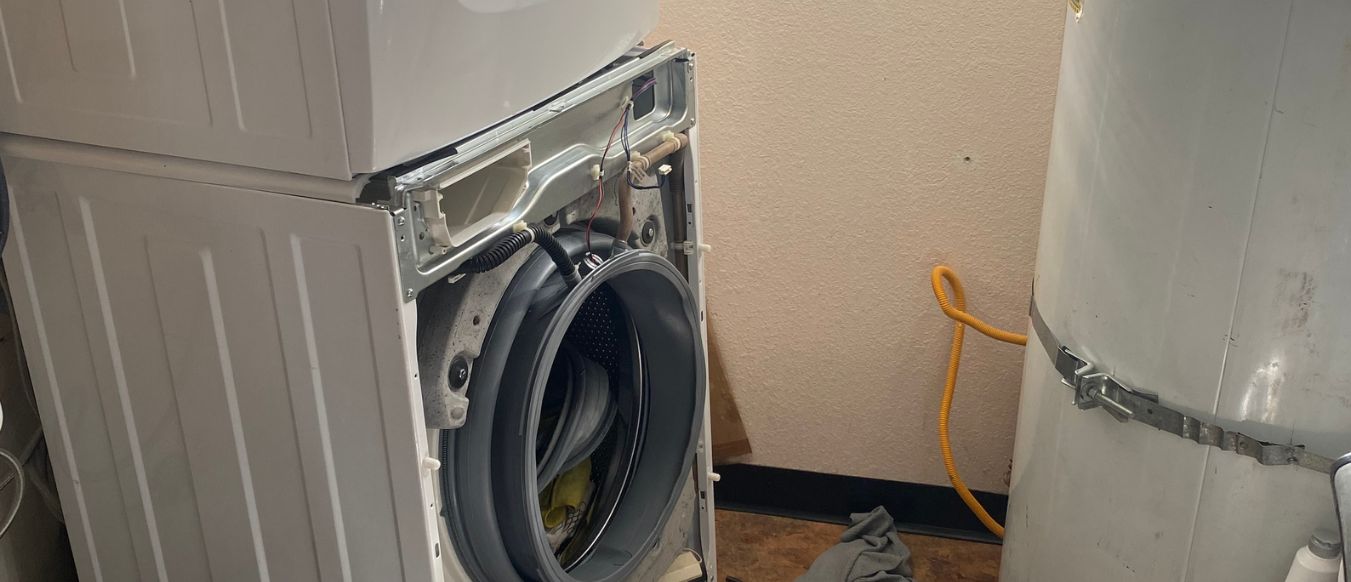
- Repair Dynamics: Replacing rear drum bearings or tub assemblies on front loaders requires complete machine disassembly, driving up labor costs significantly.
2. Top-Loading Washing Machines
- Common Vulnerabilities: Worn agitator dogs, broken drive belts, and failing lid switches.
- Repair Dynamics: Accessing drive belts, agitators, and motor couplers on top loaders is straightforward, keeping labor time short and repair estimates lower.
Minor DIY Fixes vs. Major Unit Failures
Evaluating whether an issue is minor or major prevents unnecessary service calls and helps you make a confident decision.
| Issue Severity | Component / Problem | Typical Symptoms | Recommended Action |
|---|---|---|---|
| Minor Repair | Clogged Hose | Water drains slowly or backs up into the drum | Repair: Clear debris or replace the hose for low cost. |
| Minor Repair | Worn Drive Belt | Motor hums but the drum will not spin | Repair: Inexpensive part that is quick to install. |
| Minor Repair | Broken Door Latch / Lid Switch | Unit will not start or stops mid-cycle | Repair: Simple electrical swap to restore full function. |
| Major Failure | Faulty Drive Motor | Burning smell, loud grinding, or complete drive failure | Replace: High part and labor costs rarely justify fixing. |
| Major Failure | Cracked Outer Tub | Active water leaking from the bottom during fill cycles | Replace: Structural damage risks severe household water damage. |
| Major Failure | Main Control Board Failure | Blank display, persistent error codes, or dead power | Replace: Costly board replacements on older models offer low value. |
Common Minor vs. Major Washing Machine Issues
Understanding the specific nature of your washer’s mechanical or electrical breakdown helps you determine whether a quick fix makes sense or if a full unit replacement is necessary.
Common Minor Issues
- Clogged Hoses: Hoses can become clogged with lint, mineral scale, and laundry debris over time. Cleaning or replacing a clogged fill or drain hose is a simple, straightforward, and inexpensive repair that quickly restores full function.
- Worn-Out Belts: Drive belts naturally wear out, stretch, and break over long periods of heavy use, preventing the drum from spinning properly. Replacing a worn or snapped belt is usually a quick, affordable fix that extends the overall life of your appliance.
- Door Latch Problems: Modern washers rely on door latches and safety switches to ensure the door is securely shut before starting a cycle. A broken door latch can prevent the machine from starting entirely, but replacing the latch mechanism is a minor repair that can be done quickly and affordably.
Common Major Issues
- Faulty Motor: The drive motor is one of the most critical components of a washing machine. If it fails, the machine will not agitate, spin, or operate at all. Replacing a motor is expensive in terms of both parts and labor, and it is often not worth the cost compared to replacing the machine.
- Cracked Tub: A cracked inner or outer tub causes active water leaks that can damage the machine’s internal components and flood surrounding floors. Repairing or replacing a damaged tub is typically very costly due to the complete disassembly required.
- Electrical Problems: Significant electrical issues, such as a failing main control board or shorted internal wiring, can be difficult to diagnose and very expensive to repair. In many cases, replacing the machine is the more practical and reliable long-term solution.
Hidden Costs: Water Damage, Downtime, and Inefficiency
Fixing an old washer repeatedly carries hidden expenses that extend beyond the immediate service bill:
- Risk of Water Damage: Aging water inlet valves and cracked tub seals can burst without warning, causing thousands of dollars in subfloor and drywall damage.
- Laundromat Expenses: Extended downtime while waiting for backordered parts forces trips to the laundromat, adding transportation and wash fees.
- Utility Creep: A failing motor draws higher electrical currents to turn the drum, quietly inflating your monthly electric bill.
“Prioritizing safety and structural integrity prevents catastrophic household flooding. If an aging washer develops a leaking tub or fraying internal wiring, replacement is always the safest option.”
Understanding Warranties, Depreciation, and Part Availability
Before approving an expensive quote, review these financial and logistical details:
- Warranty Coverage: Check if your unit is still under manufacturer or extended warranty. Covered parts and labor dramatically change the cost-benefit ratio in favor of repair.
- Historical Repair Data: Keep a log of past service dates. Spending $150 three times a year equals $450 in annual maintenance, making a new $600 machine a smarter financial investment.
- Part Obsolescence: As washing machines age past 10 years, manufacturers stop producing specific control boards and drive assemblies, leading to long delays or inflated part costs.
Proactive Maintenance Tips to Extend Washer Lifespan
You can prevent sudden breakdowns and avoid early replacement by keeping up with routine maintenance:
- Inspect Supply Hoses Annually: Check rubber water inlet hoses for bulges, cracks, or corrosion. Replace them with braided stainless steel hoses every 5 years.
- Avoid Overloading the Drum: Overfilling the tub strains drive belts, snaps motor couplers, and wears out rear drum bearings prematurely.
- Clean the Drain Pump Filter: Routinely remove lint, coins, and stray debris from the pump filter to prevent drain motor burnout.
- Leave the Door Ajar After Cycles: Keep front-loader doors cracked open between washes to dry the door boot seal and prevent mold growth.
Balancing Efficiency and Long-Term Value
Deciding whether to repair or replace your washing machine comes down to balancing immediate service estimates against long-term operating costs. Minor issues like clogged hoses, worn belts, or faulty door latches are inexpensive to fix and well worth the investment. However, if your washer is over 10 years old, requires frequent service calls, or faces major motor and tub failures, buying a new energy-efficient unit is the most practical and cost-effective choice.
Premier Washing Machine Services in Berkeley, CA
In the heart of Berkeley, CA, Zuta Appliance Repair stands out as your trusted partner for maintaining household appliances. We deliver honest, high-quality washing machine maintenance and repair services designed to extend your appliance’s lifespan, reduce energy bills, and restore peace of mind.
Skip the diagnostic guesswork and keep your laundry routine on track. Contact Zuta Appliance Repair today at (415) 592-4633 or book your service online.

One Response