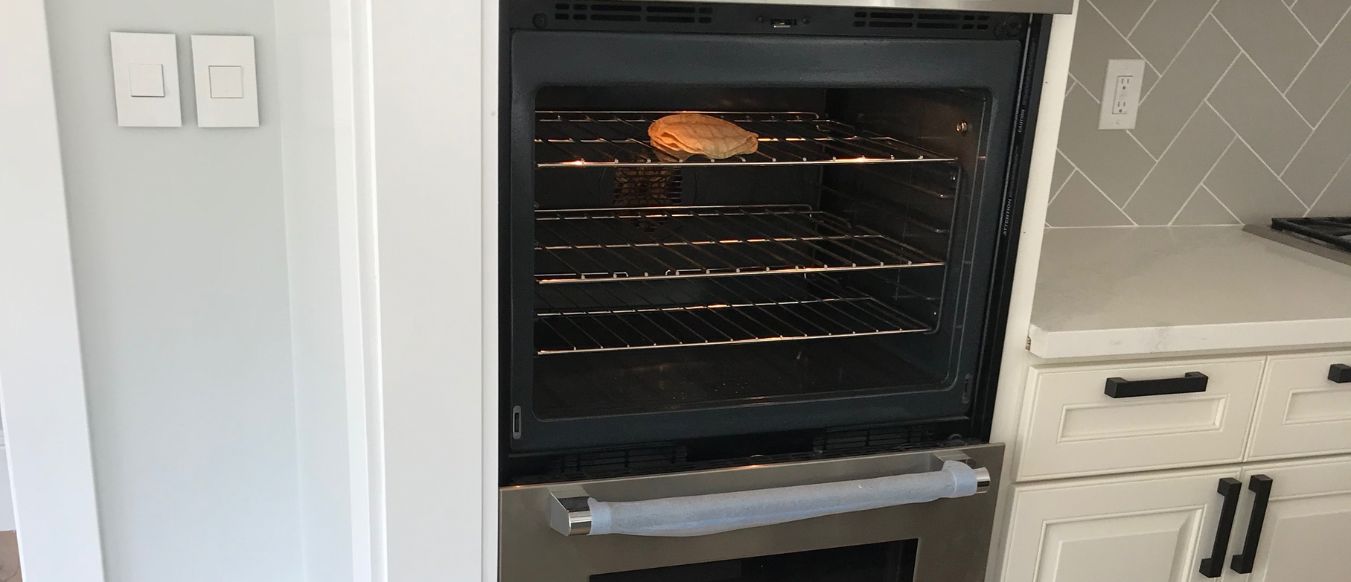
You set the oven to 350°F. Go back to chopping onions. Fifteen minutes later no beep. You peek at the display. It says 290°F. Dinner is running late. The oven is the reason.
A slow preheat usually has a cause. It might be a part or a loose door seal. Sometimes it’s how the oven is loaded. Eight causes come up a lot. You can check a few of them yourself.
Quick Answer: Most ovens reach 350°F in 12 to 15 minutes. If yours needs 20 minutes or more something is probably off.
How Long Should an Oven Take to Preheat?
For electric and gas ovens 12 to 15 minutes gets you to 350°F. Cranking it up to 450°F takes a few minutes and thats normal. Grab a kitchen timer and time your oven once. Then you’ll know what “normal” looks like for your kitchen.
Some ovens are slow from day one. Newer ranges often have cavities and more space means more heat to build. If your time has jumped from what it used to be that’s when to start looking for a cause.
| Normal Reason for a Preheat | Effect |
|---|---|
| Large oven cavity | Takes more heat to fill the space |
| Hidden bake element | Heats the oven more gently |
| 208-volt power supply | Heats than 240 volts |
| Extra racks left inside | Adds more metal to warm up |
| High temperature setting | Needs more time to climb |
Good to Know: Lots of ovens beep before the walls and racks are fully hot. Give it a few minutes and your food will bake more evenly.
8 Common Causes of an Oven Taking Long to Preheat
1. A Weak or Worn Bake Element
In an oven the bake element is the coil on the bottom. It should glow orange-red within a couple of minutes. After years of use it gets tired. It still turns on. It puts out less heat than before.
Turn the oven on. Look inside. Blisters or cracks on the coil or a stretch that stays dark mean the element is going. Some ovens hide the element under the floor so you can’t see it all. A tech who does oven repair can test it with a meter fast.
2. A Weak Gas Igniter
Gas ovens have an igniter, a part that glows hot. It has to get hot enough to open the gas valve. As it ages it pulls less current. The valve opens only halfway and the flame stays small.
If you can see the igniter through the panel watch it for a minute. A good one glows orange. A weak one glows. Takes forever. When a gas oven takes long to preheat this is the first thing to suspect.
Safety Note: If you smell gas get out of the house. Call your gas company right away. Gas repairs should always go to a technician.
3. A Faulty Temperature Sensor
The sensor is a metal rod, usually at the back of the oven. It tells the control board how hot things are inside. If the readings drift the board may shut off heat early. Keep it low.
An oven thermometer makes a quick check. Put it in the middle of the center rack. Read it when the oven beeps. A gap of 20 degrees or more is worth a look. Testing the sensor takes a meter so most people hand this one to a tech.
4. A Failing Thermostat or Control Board
Older ovens use a thermostat. Newer ones use an electronic control board. Either one can go bad. The oven might cut the heat at times or send weak power to the element.
Watch for baking big temperature swings, error codes or buttons that stop responding. It’s hard to confirm at home since a bad board can look totally fine. If the element and sensor pass their tests this is the place to look. This guide on identifying oven issues lists warning signs.
5. A Worn Door Gasket
The gasket is the seal around the oven door. When its torn, flat or loose heat leaks out. The oven keeps running to make up for it. The preheat drags on.
While the oven heats run your hand along the door edges. Warm air coming out means the seal isn’t tight. Also check that the door closes all the way and the hinges aren’t sagging. Some ovens have no gasket along the bottom of the door. Thats normal.
6. Grease and Food Buildup
Spills bake onto the element the walls and the sensor. A greasy coat on the sensor can throw off its readings. On a gas oven buildup can clog the burner ports too.
Wipe the inside when the oven is cool. Keep spray cleaner away from the sensor and the element. Read your manual before you run a self- cycle because some racks and parts shouldn’t go through it. Regular cleaning is part of preventative maintenance for any oven.
7. Racks, Pans and Stones Left Inside
Every rack and pan there soaks up heat. So does a pizza stone or a baking steel. The oven has to warm all of it before the air hits the temperature. Stones and steels are the slowest and often need 45 minutes or more.
Pull out any racks you don’t need. Leave the stone on the shelf unless the recipe calls for it. Skip the foil on the oven floor too. Most manufacturers warn against it since it can block heat and damage the oven.
8. Low Voltage or Supply Problems
Electric ranges are wired for 240 volts. Some buildings only supply 208 volts and an oven on that supply heats slower. A loose or burned wire at the connection can also cut the power going to the element.
A gas oven can have gas pressure or a shutoff valve thats only partly open. Check the breaker panel for a tripped breaker. Make sure the gas valve is fully open. After that it’s wiring or gas work so call a pro. Don’t open the panel while the range is plugged in.
Easy Checks to Try First
These take a few minutes. Cost nothing:
- Take out extra racks, pans and stones.
- Keep the door shut while the oven preheats.
- Set an oven thermometer on the center rack.
- Watch the bake element or igniter as it heats.
- Feel around the door edges for air.
- Wipe out grease when the oven is cool.
- Look for a tripped breaker.
- Jot down your preheat time once a month.
Pro Tip: If your preheat time creeps up over a weeks a part is probably wearing out. A small repair costs less when you catch it early.
When to Call an Oven Repair Technician
Some problems go past what you can check at home. Book a repair visit if you see any of these:
- The oven takes 20 minutes or more to reach 350°F every time.
- You smell gas.
- You see sparks or smell something burning.
- The element or igniter looks damaged.
- Error codes keep coming back.
- The breaker trips when the oven runs.
What to Do Next If Your Oven Still Preheats Slowly
slow preheats come down to one thing. It could be an element, a weak igniter, a worn seal or a dirty sensor. Extra racks and low voltage can add to the wait too. Start with the checks. Take out the racks and see what the thermometer says.
If the oven still needs 20 minutes or more a worn part is likely. It won’t fix itself. Replacing an element or igniter usually costs less than buying an oven. A tech can tell you which part failed before you spend money on parts.
Book an Oven Repair
Zuta Appliance Repair fixes ovens, across the East Bay including Pleasant Hill, Danville, Walnut Creek, Orinda, Lafayette and Berkeley. Call (415) 592-4633. Send a message online to book a visit. Most requests get a day or next-day slot. Tell them your ovens brand and what its doing.