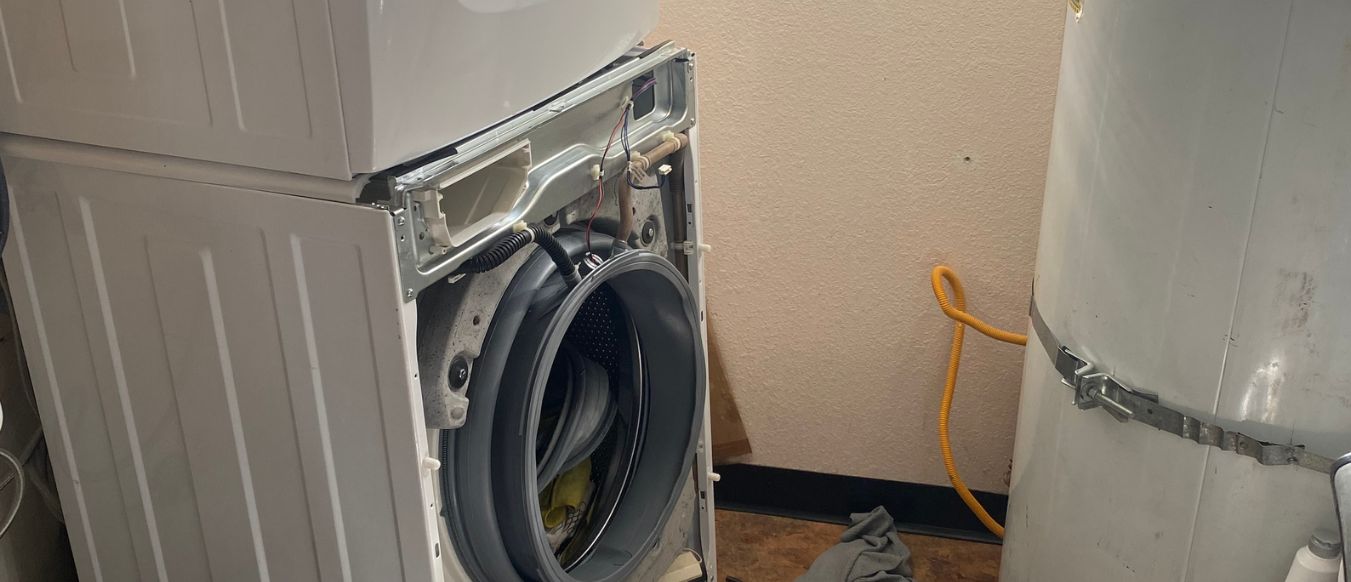
You load the clothes, close the door, hit start, and nothing happens. No hum, no click, no lights. It’s a frustrating way to start laundry day, and it usually happens at the worst possible time, like right before a trip or after a busy week when the hamper is already full.
A washing machine that won’t turn on is often something simple to trace. Most issues come down to power or a faulty door switch. Sometimes it’s the control board. A few checks can usually point to the cause within minutes, and if none of them fix it, that’s the sign to call a repair technician.
Start With the Simple Stuff
Before digging into anything technical, check the easy stuff first. Many washers that seem broken just need one of these small fixes.
- Check that the machine is actually plugged in all the way
- Look at your breaker box for a tripped breaker or blown fuse
- Make sure the outlet itself is working by testing another device in it
- Confirm the door or lid is fully closed and latched
- Check if you accidentally hit a delay start or child lock button
These things get overlooked often, especially if kids or pets have been near the laundry room.
Safety first: Always unplug your washing machine before touching any wires, connectors, or panels. Water and electricity are a bad mix, and even a machine that appears to have no power can still hold a charge in certain parts.
Why Washing Machines Stop Turning On
Once you’ve ruled out the obvious stuff, the cause usually comes down to one of a few parts. Washing machines rely on several parts working together: the power supply, the door switch, the control board, and the motor. If one of these fails, the machine won’t start.
Front loading washers tend to have more sensors than top loaders, so there are more places for something to go wrong. Older machines are more likely to have worn mechanical parts like switches and belts. Knowing your washer’s age and type helps narrow down where to look first.
Common Causes and Quick Fixes
| Possible Cause | What It Usually Looks Like | What To Try |
|---|---|---|
| No power to the outlet | Machine is completely dead, no lights at all | Test the outlet with another device, check the breaker |
| Tripped door or lid switch | Machine hums or clicks but won't start | Open and firmly close the door or lid again |
| Faulty power cord | Machine works sometimes, or flickers | Inspect cord for damage, avoid using it if frayed |
| Bad control board | Lights come on but nothing else happens | Try a reset by unplugging for a few minutes |
| Broken start switch or button | Buttons feel loose or don't respond | Press firmly, check for a stuck button |
| Blown thermal fuse | No response at all, machine feels cold | Usually needs a technician to replace |
Check the Power Cord and Outlet
Pull the machine away from the wall if you can, and check the cord closely for cracks, burn marks, or spots that look chewed or worn thin. A damaged cord is a fire risk, so stop using the machine until it’s replaced if you spot any damage.
Next, test the outlet itself with a lamp or phone charger. Outlets can go bad on their own, especially in older homes, and it has nothing to do with the washer. If the outlet is on a GFCI circuit, which many laundry rooms have, press the reset button on the outlet too. It’s a small button that’s easy to miss, and a tripped GFCI outlet is one of the most common reasons a washer suddenly has no power.
Look at the Door or Lid Switch
Front load washers and top load washers both use a switch to sense whether the door or lid is closed. If this switch fails or gets out of alignment, the machine may act like the door is open even when it’s shut, which stops it from starting.
- Open the door or lid all the way, then close it firmly until you hear or feel a click
- Check for anything blocking the door from closing completely, like a stray sock or detergent cap
- On top loaders, try lifting and lowering the lid a few times to see if the switch responds
- Look for a small plastic latch near the door frame that might be cracked or loose
Quick Tip: If your top loader clicks when you lift and lower the lid but still won't start, that click is a good sign. It usually means the switch itself works, and the problem is somewhere else in the machine.
The Control Board Could Be the Problem
Modern washing machines rely on a control board to manage the wash cycle and timing, plus the signal that starts the motor. When this board has an error or gets stuck, the machine can look completely unresponsive even though the parts around it are fine.
A reset can sometimes fix this. Unplug the washer for about five minutes, then plug it back in and try starting a cycle again. This gives the board a chance to clear out any stuck signals. If a reset doesn’t help and the lights are on but the machine still won’t start, the board itself may need testing or replacing, which usually calls for a washing machine repair professional rather than a DIY fix, since these boards are sensitive parts.
Step by Step: What To Try Before Calling for Help
- Unplug the washer and check the cord for damage
- Test the wall outlet with another device
- Check your breaker panel for a tripped switch
- Reset any GFCI outlet in the laundry area
- Open and firmly close the door or lid
- Unplug the machine for five minutes, then plug it back in
- Try a different, shorter wash cycle to rule out a settings issue
- Listen closely for any clicks, hums, or buzzing when you press start
Going through this list in order can save you a service call if the fix turns out to be something small. Keep track of what you notice at each step, since that information helps a technician if you do end up needing one.
Preventing Power Problems in the Future
A few simple habits can lower the odds of your washing machine losing power again. Avoid running the washer on a shared circuit with other heavy appliances, since this adds strain on the outlet and breaker. Test any GFCI outlets near your laundry area every few months, since these can trip on their own over time. Keep the door or lid switch clean and free of lint or detergent buildup, since a dirty switch is more likely to misread as open.
Routine care helps avoid a washing machine that won’t turn on in the first place. Scheduling preventative maintenance once a year lets a technician catch worn parts and loose connections before they turn into bigger issues. Staying ahead of these problems is usually simpler than dealing with a full breakdown later.
When It's Time to Call a Professional
If you’ve gone through the basic checks and the washer still won’t turn on, the issue is probably internal and best left to a trained technician. Electrical parts like control boards and thermal fuses need the right tools and training to work on safely. Getting it wrong can turn a small problem into a bigger, more expensive one. If the washer is older and this isn’t the first issue you’ve had with it, compare the repair cost against a new machine: as a general rule, repair is usually worth it if the washer is under 10 years old and the cost is less than half the price of a new one. A technician can usually confirm what’s wrong within a few minutes and tell you whether repair or replacement makes more sense.
Turning back on doesn’t fix everything. If clothes keep coming out dirty afterward, the reasons a washing machine isn’t cleaning clothes properly are usually unrelated to power. Regular preventative maintenance on your appliances each year can also catch small wear and tear before it turns into a machine that won’t start at all.
Need a Hand With a Washer That Won’t Start?
Zuta Appliance Repair offers same day and next day appointments across the East Bay, with upfront pricing and no hidden costs. Reach out to our team and we’ll help you figure out what’s going on.
Frequently Asked Questions
As a general guide, if the machine is under 10 years old and the repair cost is less than half the price of a new one, repairing usually makes more sense than replacing.