You open the lid after a wash cycle and there it is. A tub full of dirty, soapy water that just won’t go anywhere. A washing machine not draining is one of the most common laundry room headaches, and it almost always happens at the worst time, right when you have a pile of clothes waiting.
Most drainage problems come from a handful of simple causes. A clogged filter, a kinked hose, or a small object stuck somewhere in the system. You don’t always need a repair technician to figure out what’s wrong. Below are the usual suspects behind a washer won’t drain problem, along with clear steps to try before you call anyone.
Quick Tip: Before you do anything else, unplug the washer and check that the drain hose isn't pinched behind the machine. This one small check clears up the problem in a lot of cases.
Common Reasons Your Washing Machine Won't Drain
Most drainage issues trace back to something blocking the flow of water out of the machine. These causes show up again and again.
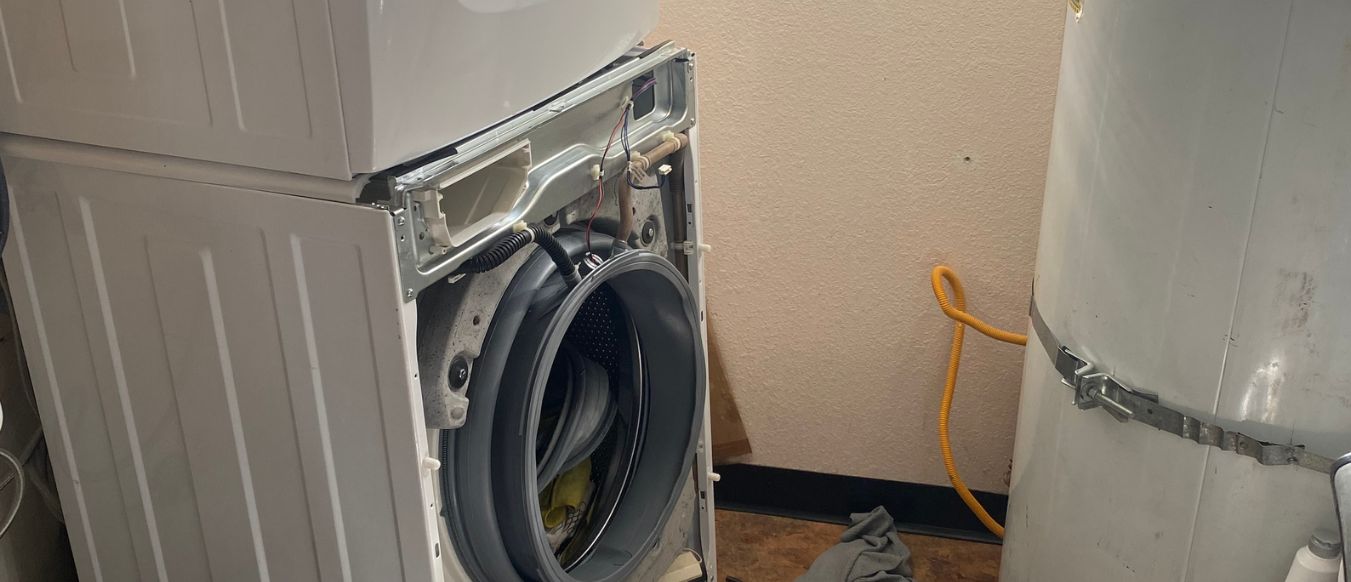
- Clogged drain pump filter: Coins, hair ties, tissues, and small socks get trapped here and slowly choke off water flow. Front load washers usually have a small access door for this filter, while top load models often need the back panel off to reach it.
- Clogged or kinked drain hose: If the machine got pushed back against the wall, the hose can bend and trap water inside it. Lint and small debris also build up inside a drain hose over time, even without a visible kink.
- Drain hose set too high or too low: Most machines need the hose positioned within a specific height range, or drainage suffers.
- Faulty drain pump: The pump wears out over time, especially in machines that are eight to ten years old.
- Blocked standpipe or drainpipe: Sometimes the problem isn’t the washer at all. It’s the household plumbing it drains into.
- Overloading the washer: Too many clothes at once can trap suds and water, making it seem like a drainage failure.
- Faulty lid switch or door lock: On some models, the machine won’t complete a drain cycle if it thinks the door is open.
Comparing the Most Likely Causes
| Cause | Common Sign | How Hard to Fix |
|---|---|---|
| Clogged pump filter | Slow draining, gurgling sounds | Easy |
| Kinked drain hose | Water pools, then slowly drains | Easy |
| Hose height wrong | Water siphons back into tub | Easy to Medium |
| Worn out drain pump | Humming noise, no drainage at all | Medium to Hard |
| Blocked standpipe | Water backs up even with empty tub | Medium |
| Overloaded load | Clothes soaked, water not fully removed | Easy |
Most homeowners can rule out two or three causes just by looking at the machine and listening to the sounds it makes during the cycle.
Standing water left in the tub for more than a day can start to smell and may lead to mold growth around the door seal. A machine that struggles to drain often also has trouble spinning properly, since the spin cycle can’t run right until most of the water has cleared out. That’s the same clogged pump or filter behind a lot of washing machines that won’t spin, so the two problems tend to show up together.
Drainage trouble can also show up alongside leaks, particularly if a hose connection loosens while you’re checking for clogs. Loose fittings and worn hose seals are behind most washing machine leaks, so water on the floor next to a full tub usually points to two separate problems happening at once.
How to Fix a Washing Machine That Won't Drain
Work through these steps in order. Most people solve the problem within the first two or three.
- Unplug the machine and turn off the water supply. Safety first, always: Leaving it unplugged for a minute also resets a control board that’s gotten stuck mid-cycle.
- Check the drain hose for kinks: Pull the machine out slightly and straighten any bends you find.
- Locate and clean the pump filter: It’s usually behind a small panel at the front bottom of the machine. Have a shallow pan ready, since water will spill out.
- Look inside the pump housing for debris: Coins, buttons, and small items often sit right at the pump entrance.
- Check the hose height at the drainpipe: It should sit within the range listed in your owner’s manual, usually between 30 and 96 inches.
- Run a short rinse and spin cycle: This tells you whether the fix worked before you commit to a full wash load.
Safety First: Never reach into the pump area while the washer is plugged in, and always let hot water cool before draining it manually. Taking a few extra minutes here keeps you safe from burns and electric shock.
When You Should Call a Professional
Some drainage problems go beyond a quick filter clean. Call in a technician if you notice any of the following.
- The machine drains partway, then stops every single time.
- You hear a loud humming sound but no water moves at all.
- Error codes keep appearing on the display panel.
- The pump filter is clear, but water still won’t leave the tub.
- The machine is older than eight years and this isn’t the first repair it’s needed.
A worn out drain pump usually needs replacing rather than cleaning, and that calls for the right parts and the right tools. Whether to DIY a washing machine repair or call a technician usually comes down to how comfortable you are opening the pump housing and how old the machine already is.
Keeping Drainage Problems From Coming Back
A washing machine that drains well today can still develop problems down the road, especially without a little routine care. Most manufacturers recommend cleaning the pump filter every one to three months, depending on how often the machine runs and how many kids in the household leave small items in their pockets.
Parts do wear out with age no matter how careful you are. The drain pump is one of the parts that often need replacing in washing machines, usually somewhere between year six and year ten of regular use, and knowing that ahead of time can help you catch a problem before it leaves you with a tub full of water.
Simple Habits That Help
- Empty pockets before every load, especially with kids’ clothing.
- Clean the pump filter on a set schedule, not just when there’s a problem.
- Avoid overloading the drum, even for a “quick” load.
- Check the drain hose position once or twice a year.
- Use the correct amount of detergent, since too many suds can slow drainage.
Staying on top of these small habits adds real years to your washer’s working life. Regular upkeep, of the kind covered in the benefits of regular washing machine maintenance, is one of the easiest ways to avoid bigger repair bills later on.
Getting Your Washer Draining Properly Again
A washing machine not draining is annoying, but the cause is usually easy to track down. Most cases trace back to a clogged filter or a bent hose. If those check out fine, an aging pump is the next thing to look at. Working through these checks solves the problem for a lot of households without needing to pick up the phone.
If the water still won’t budge after trying the steps above, or you’d rather not get your hands wet, the team at Zuta Appliance Repair handles washing machine repair across the East Bay and can usually get a technician out the same or next day. For older machines, the decision often comes down to cost. Repairing versus replacing a washing machine generally makes sense as a repair when the bill stays under half the price of a new unit.
Need a Hand With a Washer That Won’t Drain?
If the steps above didn’t solve it, our technicians handle washing machine drainage problems across the East Bay every week and can usually spot the cause within the first visit. Call or contact Zuta Appliance Repair to book a same or next day appointment.
Frequently Asked Questions
This usually means the pump filter or drain hose is blocked. Water gets trapped in the tub because it has nowhere to go. Cleaning the filter solves this in most cases.