The refrigerator has to provide assurance that the food items will stay fresh and that drinks will stay cold, while the freezer must make sure that everything stays frozen. In the event when the freezer works efficiently and the refrigerator does not work, what would happen? It would be really annoying because everything would get spoiled.
Do you encounter this trouble in your Lafayette, CA, household? In such a case, there might be several reasons: the blockage of air vents, dirt on condenser coils, the problem with an evaporator fan, or malfunctioning defrost system. Since many refrigerators have one system of cooling for both compartments, the issue with the airflow can negatively impact the operation of the refrigerator section despite the proper functioning of the freezer part.
Having an idea of the possible causes will make it easier for you to understand what to look out for yourself and when you need professional Refrigerator Repair. The following guide provides an answer to the question why the refrigerator becomes warm while the freezer is fine.
How Can the Freezer Stay Cold While the Refrigerator Gets Warm?
Refrigerators have been designed in such a way that they generate cold air in the freezer and then push a portion of the generated air to the refrigerator compartment through vents.
When everything is okay, the two compartments will maintain their appropriate temperature settings. However, when the cold air fails to get to the refrigerator compartment, the freezer will keep on freezing its content while the refrigerator becomes too warm.
A malfunction in the cooling system does not have to necessarily mean that the whole refrigerator is malfunctioning. In most cases, it could be just a matter of blocked vents or a broken fan.
Common Reasons Your Refrigerator Is Warm but the Freezer Is Cold
1. Clogged Air Vents in the Refrigerator
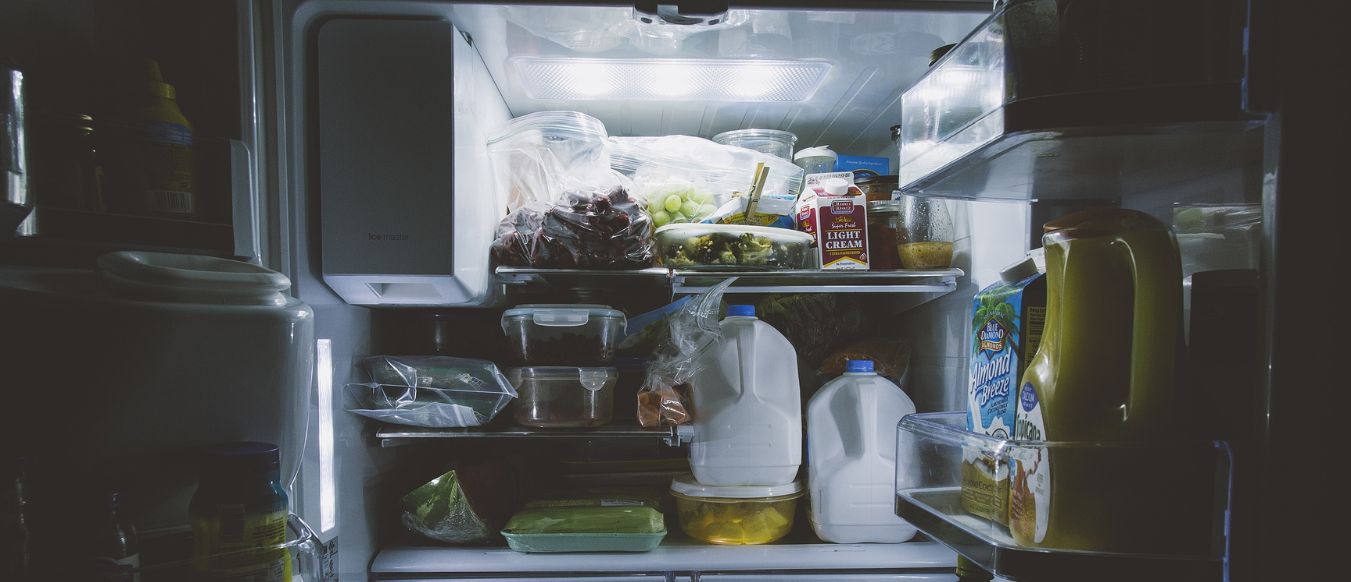
Clogged air vents represent one of the first steps to check. If there are food packages, large boxes, or other containers obstructing the air vents, cold air cannot circulate properly from the freezer to the fridge part.
This can be the case when the food packages are pushed toward the back of the refrigerator or when the refrigerator is stuffed more than it is recommended. It is possible that the freezer will stay cold since its cooling unit works, while the fridge is not getting enough cold air.
In order to test this, you should make sure that there is enough space near the air vents and among the food packages.
2. An Improperly Functioning Evaporator Fan
The evaporator fan blows cold air into the fridge and freezer sections. In case of motor malfunction, blocking of the fan motor due to formation of ice, or improper functioning of the motor, the cold air might not be delivered to the refrigerator compartment.
You will feel that your freezer is working fine, while the fridge is hot. Some fridges could start making odd sounds such as buzzing, clicking or scratching sound in case of a faulty fan.
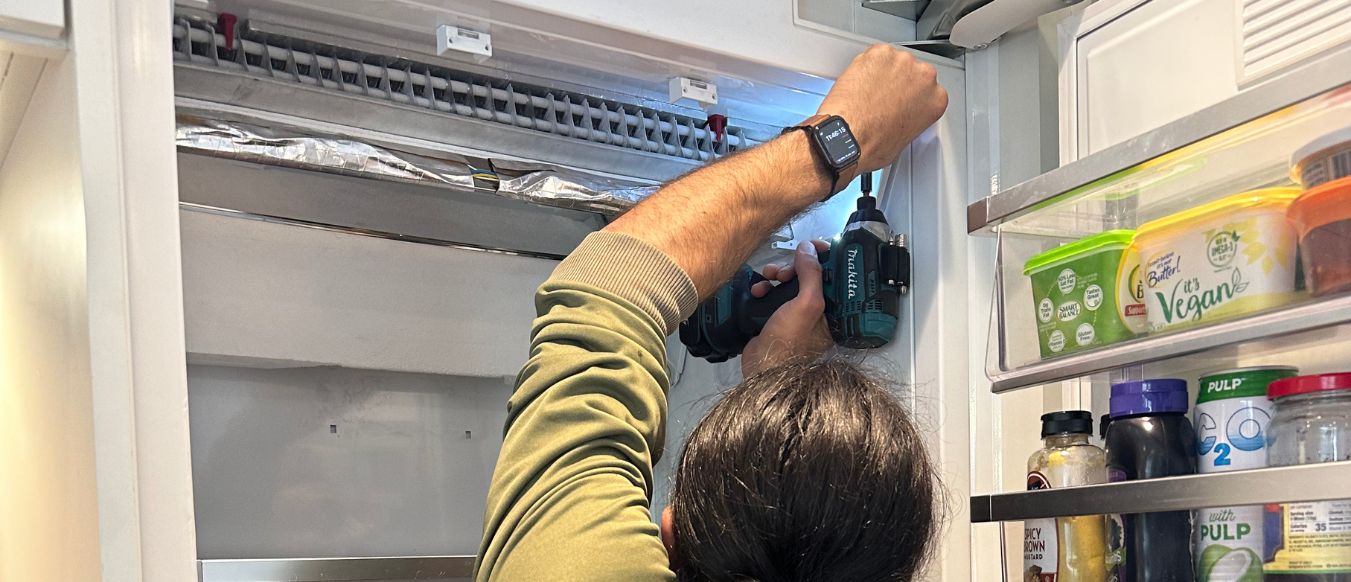
It is possible for you to find out whether the vents are clogged or not, but in most cases, fixing or replacing the fan requires the intervention of an expert.
3. Dirt Build-Up in Condenser Coils
The condenser coil acts as a place where all the heat in the refrigerator dissipates. However, there may be a buildup of dirt, dust and other particles like hair on the condenser coil, preventing the refrigerator from disposing of the heat.
Dusty condenser coils will cause the refrigerator to take more time to cool the air, use more power, or even be unable to keep the correct temperature in the refrigerator. This will depend on the model of the fridge and extent of dirt accumulation.
The manufacturer’s guidelines will advise whether it is safe to disconnect the refrigerator from the power outlet and clean the accessible parts of the coil using the right brushes or vacuum cleaner attachments.
4. Ice Build-up in the Defrost System
On the refrigerators that possess an automatic defrost system, ice is formed on the evaporator coils of the refrigerator and melted automatically. If the automatic defrosting system breaks down and its components such as the heating coil, sensors, and thermostat are damaged, then the ice will form and block the air flow.
While the freezing compartment will remain cool, the refrigerating compartment will become warm due to lack of air flow. One will also notice ice accumulating in the freezer on the back wall and longer cooling cycles.
Ice build-up usually results from a malfunctioning element as opposed to low settings on the thermostat. The ice will melt when one switches off the refrigerator, but it will come back once the part stops working.
5. Wrong Temperatures
It is important to note that sometimes the issue may not be caused by malfunctioning parts; there could have been a change in the temperature of the refrigerator without knowledge while cleaning or loading groceries.
Check the manual provided with your appliance for the temperature requirements and find out if the present temperature setting is appropriate. In any case, it will be safe to assume that 40°F or less temperature setting should be considered appropriate for your refrigerator.
After the setting of temperature, wait for some time and then check if the refrigerator is still warm or not.
6. A Door Gasket That Is Deteriorated
There is a rubber gasket on the refrigerator door that forms a seal that holds in the cold air. Should the gasket become cracked, loose, dirty or damaged, there will be a chance of warm air coming in through the compartment.
Inspect the door for any gaps or signs of damage to the seal. You need to clean off any dirt from the door using a damp soft cloth with some mild soapy water.
The worn-out gasket should be replaced.
What Should You Check First?
You can conduct a few basic tests before getting any professional service done. Below is a chart which highlights some of the common symptoms and their causes.
| Symptom | Possible Cause | Recommended Action |
|---|---|---|
| Freezer is cold, but the refrigerator is warm | Blocked air vents | Move food away from vents |
| Unusual fan noise or weak airflow | Evaporator fan issue | Arrange a fan inspection |
| Refrigerator runs constantly | Dirty condenser coils or cooling issue | Clean accessible coils if permitted |
| Heavy frost on the freezer's back wall | Defrost system problem | Request professional diagnosis |
| Door does not close tightly | Damaged or dirty gasket | Clean and inspect the seal |
| Temperature changed recently | Incorrect settings | Check the owner's manual |
How to Prevent Refrigerator Cooling Problems
Maintenance will make your fridge work effectively, hence reducing the chances of air problems.
Position Foods and Air Vents Properly
Make sure that there is sufficient space for air circulation in the area of the vents. Make sure that you don’t place any large food items against the rear wall. Make sure that hot food is cooled before storing in accordance with food handling procedures.
Clean the Coils and Door Gaskets
Follow the guidelines of the manufacturer in performing cleaning. Periodically check the door gaskets to find out if they are dirty, cracked, or loose.
Check Temperatures of Both Units
Appliance thermometers can be used for monitoring the temperatures of both the refrigerator and the freezer. Don’t base the temperatures on how cold it feels in there when you open the door. If the refrigerator is warmer than 40°F, store the food elsewhere until the problem is resolved.
When Should You Call for Professional Refrigerator Repair in Lafayette, CA?
However, if the appliance remains warm after checking these areas, then there may be a mechanical or electrical fault inside the machine. A defective fan, defrost system, temperature probe, and control board may need to be checked.
The expert refrigerator repairing service is able to establish the actual cause of the malfunction without replacing the parts. This specialist will be able to inspect the cooling system and airflow, check the parts, and make the necessary repairs.
Do not open the electrical panels or try to touch any of the exposed wires. Do not tamper with the sealed refrigerant system either as this may pose a danger to you.
However, if you notice that your refrigerator isn’t keeping your food at a sufficiently low temperature, act quickly. Foods that have been stored above 40 degrees Fahrenheit for more than two hours have to be disposed of, and if the temperature is over 90 degrees, the period becomes one hour. Better safe than sorry – ask a professional for advice.
Other Appliance Problems That May Need Attention
These devices are definitely not the only home appliances that may experience some difficulties with cooling, heating, or functioning altogether. There could be something wrong with the dishwasher, which won’t drain, or with the washer, which will not spin. These malfunctions will make the process of performing everyday tasks difficult and may require professional diagnostics.
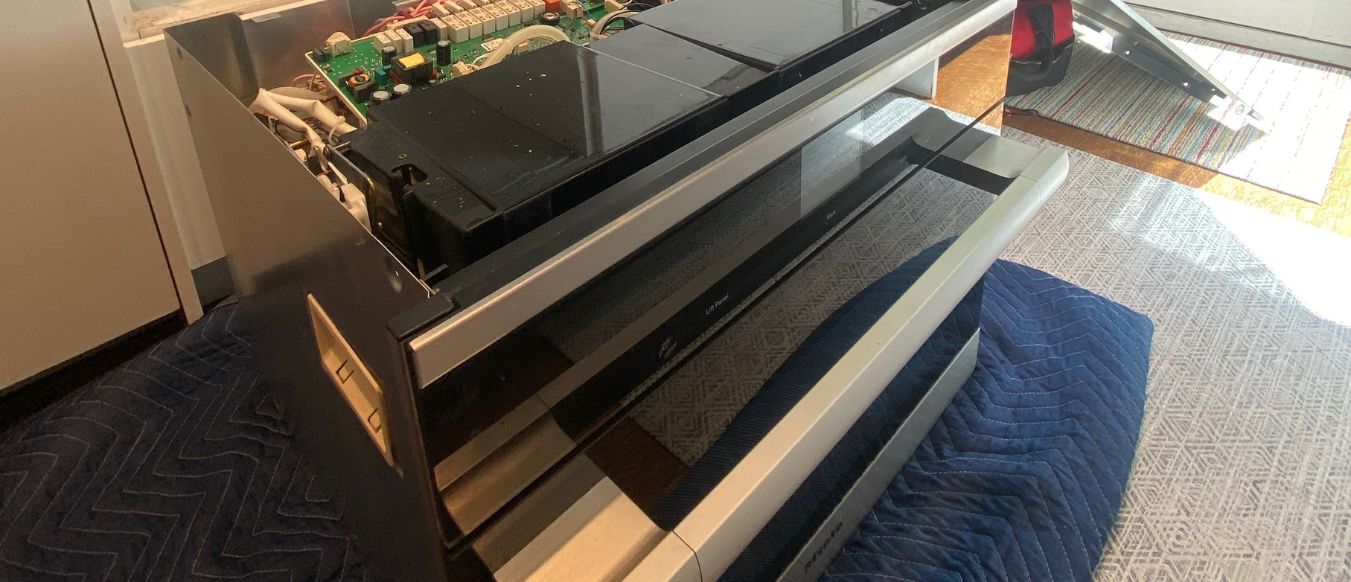
The Appliance Repair service could do it for you. Based on the problem that occurs, the needed services can include Dishwasher Repair, Washing Machine Repair, or Oven Repair.
Also, the freezer that is not keeping proper temperature needs Freezer Repair. Even though some problems might have similar symptoms to the refrigerators, the final diagnosis will depend on the particular appliance and its elements.
Early solution of such problems can be beneficial for prevention and for choosing between repair and replacement of the device.
Conclusion
High refrigerator temperature and low freezer temperature indicate there may be a possible blockage in the circulation of air, blocked vents, dirty condenser coils, or malfunctioning fans and defrost systems. The process of temperature measurement and vent cleaning can be a good initial approach; however, if the issue is not solved, consulting a professional should be the next step to take.
In case your refrigerator does not keep the food items cool in Lafayette, CA, it is important to get timely assistance to find out the reason behind the malfunctioning and return everything back to the usual functioning. Zuta Appliance Repair offers appliance repair services to those homeowners who have any issues with their household appliances. Discover more about Appliance Repair services offered by Zuta Appliance Repair.