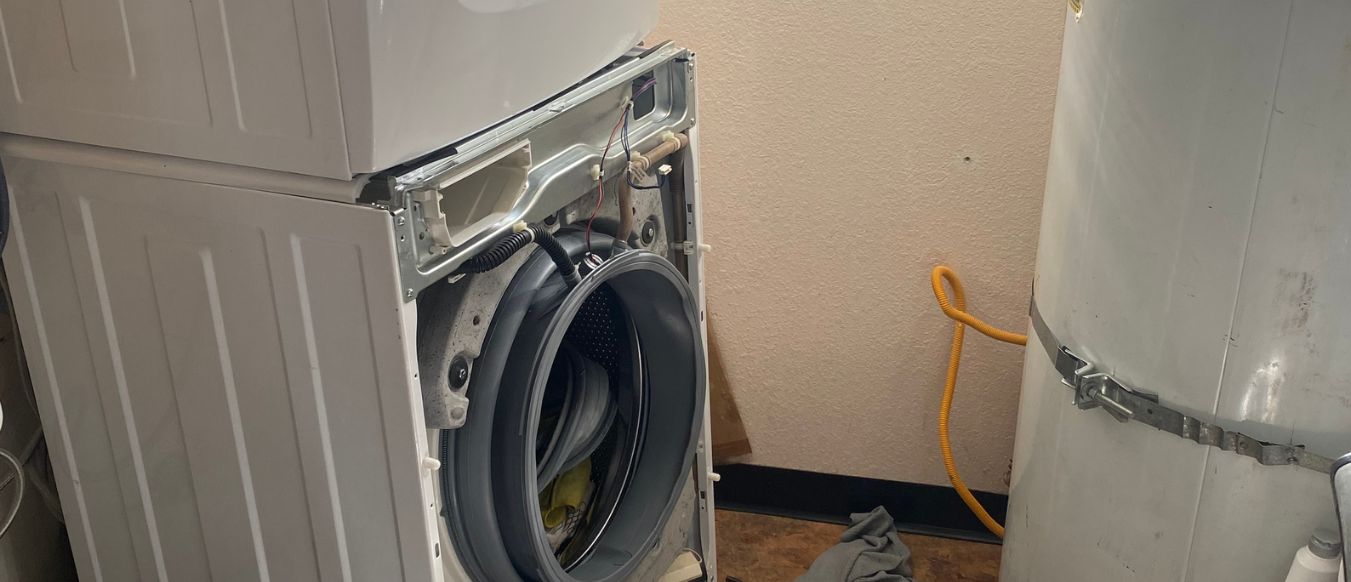
The washing machine should remove as much water as possible from the clothes during the last phase of the wash cycle. There might be an issue when you open the door of the washer and find that the clothes are dripping wet. Wet clothes take time to dry up, complicate your laundry work, and develop a foul smell.
To residents of Pleasant Hill, CA, washer that leaves clothes drenched with water could become a source of frustration if laundry is one of your busiest activities during the day. What is great about the problem is that not all reasons are hard to rectify. Some are easy enough and other need professional Washing Machine Repair.
There can be several causes for your washer to stop functioning properly, ranging from drainage problems, imbalance, filter clogging, and other issues.
What are some Reasons Why a Washer Leaks Water While Operating?
The spinning process in the washing machine makes it possible to remove the excess water from the laundry. High-speed rotation of the drum helps get rid of the water. If the drum cannot rotate or drain water properly, laundry will be soaked at the end of the process.
This issue can occur in both front-loading and top-loading washers, though the reason depends on the particular model and its age and condition.
1. There Is Something Wrong With the Drainage Process
Poor drainage is one of the most common causes of soaked laundry. First of all, the washing machine should drain all the water from the drum before the spin process starts.
A kinked or improperly placed drain hose, as well as a clogged drain pump or filter, can prevent it.
Look for any bendings or twists in the drain hose. For washing machines that have accessible drain filters, see the instructions for how to clean them in the user’s manual. Remember that the appliance should be disconnected from power before checking its accessible parts because you will inevitably get some water poured out while you open the drain filter.
If there is still water left in the drum after these checks, then the pump or other internal elements may require servicing.
2. The Spin Cycle Operates Incorrectly
The spin cycle is responsible for taking out all water from the laundry. If your washing machine normally washes your clothes but does not spin them fast enough, then your clothes are likely to become very wet after each wash cycle.
There might be problems with the motor, the drive belt, the lid switch, or the washer’s control system. In addition, some models of washing machines automatically stop their spin cycle in case of certain malfunctions or unsafe loads.
Try to run a separate spin cycle on your washer using a light and evenly balanced load.
Professional Washing Machine Repair can also determine where the problem is coming from – whether it is a mechanical component, an electrical component, or the controls of the washing machine.
3. There Are Too Many Clothes in the Drum
One more frequent cause of wet laundry is overloading the machine. In case when there is an excess of clothes in the drum, it won’t be enough space for them to turn properly, and the washing machine won’t manage to balance the load and reach the required rotation speed.
There are some loads, like towels, blankets, and jeans that can create this issue, and the machine won’t rotate due to the overload.
Follow the guidelines provided in the user manual regarding the size of the load that you should place into the drum of your washer.
If the clothes get wet because the washer is overloaded, then reducing the load size can be a solution to your problem.
4. The Laundry Is Not Balanced in the Drum
The problem may arise even if the laundry does not exceed the capacity of the drum since clothes sometimes tend to bunch up in one area of the drum when spinning.
This results in the washer wobbling, shaking, and even moving across the floor. Most contemporary washers automatically reduce the speed or stop the spin cycle upon detection of an imbalance in the drum.
In case of such a problem, redistribute the load inside the drum, and ensure that the washer sits level on the floor. In case of regular occurrence of such problems with various loads, there may be a need to check the mechanical part of the machine.
5. The Drain Filter Is Blocked
Tiny objects like coins, lint, hairpins, and strips of fabric can accumulate in the drain filter of some models of washing machines. Such an accumulation may cause obstruction to the water flow, making your clothes wetter than normal.
Some washers have an accessible drain filter, while other models have different drainage systems. It is recommended to check the user manual for your washing machine before proceeding to clean it. Turn off the machine to avoid water leakage and any possible damage.
If cleaning the drain filter does not resolve the issue, there may be a clog in your drain pump, drain hose, or water passages.
6. There Is a Problem with the Washer’s Water Level Sensor
A water level sensor in a washing machine enables it to measure the level of water in the drum. If the water level sensor and its associated parts are defective, your washing machine will not drain or spin correctly.
Your washing machine will suddenly stop or show error codes. You could even be left with water after washing clothes.
But then again, such signs could indicate other defects. The fact that the sensor is an internal electric component means you should have it checked by a professional.
Common Washer Problems
The following table presents possible reasons for soaking wet clothing and what needs to be done next.
| Problem | Possible Cause | What You Can Do |
|---|---|---|
| Water remains in the drum | Blocked hose or drainage problem | Check the hose for visible bends |
| Clothes are wet but no water remains | Weak or incomplete spin cycle | Try a balanced spin-only cycle |
| Washer shakes during spinning | Unbalanced load or leveling issue | Redistribute clothes and check the level |
| Washer stops before spinning | Load imbalance or component fault | Check the display and owner's manual |
| Problem continues after basic checks | Pump, sensor, motor, or control issue | Arrange professional inspection |
How to Troubleshoot a Washer Before Calling a Technician
There are several things that you could do before getting the appliance repaired.
Check the chosen wash program
Sometimes, certain wash programs operate at low spin speed in order not to damage the clothing made from delicate fabric. If you have been washing woolen, silk, or any other delicate fabric, then the chosen program will inevitably make more water remain on the fabric.
Make sure that your washer has a separate spin function or drain and spin.
Check the Drain Hose
Look into the washing machine and find a bent, crushed, or damaged drain hose. If the drain hose is blocked, then the water may be draining out from the washing machine.
Do not disassemble the pipes and push anything into the hose. In case you find the hose fine but the washing machine does not drain the water, then the problem may be with the drainage system.
Use Smaller and Balanced Load
Take out some of your clothes if the machine drum is overcrowded. When dealing with heavy loads, make sure to use the recommended load size by the manufacturer and do not mix one huge piece of laundry with many small ones.
Check if the right spin cycle is being used and see if the clothes get drained better.
Check for Error Codes
A modern washing machine typically displays an error code when there is any malfunctioning related to drainage, spin, or balance. Write down the error code and use your instruction manual to know what it signifies.
An error code will help you pinpoint the possible cause of the issue; however, it will not give you a definite diagnosis. If the error code keeps on coming up after troubleshooting, you need to call for professional servicing.
When Should You Schedule Washing Machine Repair?
It is natural for clothes to be slightly wet after a normal washing cycle. However, if your clothes are overly wet after every wash cycle, then there must be something wrong.
If your washing machine fails to spin, water accumulates in the machine, and the machine makes grinding noises along with constantly flashing error messages, you may need Washing Machine Repair services. If there is a burning smell or sparks from the machine, then you need to shut off the machine immediately.
There is potential danger associated with taking apart the electrical panels, testing wires, and disassembling the motor or the pump due to electrical hazard, sharp objects, and leaking.
The residents of Pleasant Hill, CA should seriously think about seeking professional help to avoid a small problem becoming a big one. The diagnosis will include checking the drainage system, spinning components, sensors, among others.
How Other Appliance Problems Can Affect Your Home Routine
The washing machine is only one component of the home appliances that run each day. When another home appliance becomes faulty, this may disrupt activities within the home and add to the hassle.
Reliable Appliance Repair will be able to provide solutions for various situations at home. For instance, Refrigerator Repair is required when the refrigerator fails to maintain the appropriate temperature, whereas Freezer Repair is recommended when there are problems with the freezing process or the formation of too much frost.
When there are issues with the draining, cleaning and accumulation of water at the bottom of the dishwasher, then Dishwasher Repair should be considered. In case the oven cannot heat food uniformly and cannot reach the chosen temperature, or does not work at all, then Oven Repair is required.
As all these appliances serve different purposes, there is one thing they have in common – the identification of the reason for a malfunction is the starting point for selecting the proper repair.
How to Prevent Clothes From Coming Out Too Wet
Proper washing technique will minimize the risks of reoccurring issues with spinning and draining. Make sure you use the proper cycle for each type of cloth, do not overload the drum, and load heavy articles in accordance with the manufacturer’s instructions.
Make sure that you do not use too much detergent, which can lead to excessive suds. You should also use detergent appropriate for your model of a washing machine.
Check the visible part of the drain when recommended by the manufacturer and check for any damage to the hoses. Be more attentive to changes in the process of spinning, draining, and noises.
It is impossible to eliminate all mechanical issues with these techniques, but at least you will minimize unnecessary trouble.
Conclusion
There could be many reasons why a washing machine will leave the laundry soaking wet. These include the machine being overloaded, the load being unbalanced, the drain hose being clogged, or even problems with the spinning function of the machine. The type of cycle, the size of the load, and checking the drainage area might resolve any easy issues, but if not, then the best thing to do is seek professional advice in order to avoid any further problems.
Zuta Appliance Repair offers appliance repair service, CA residents including repair service for washers, refrigerators, dishwashers, ovens, and freezers.