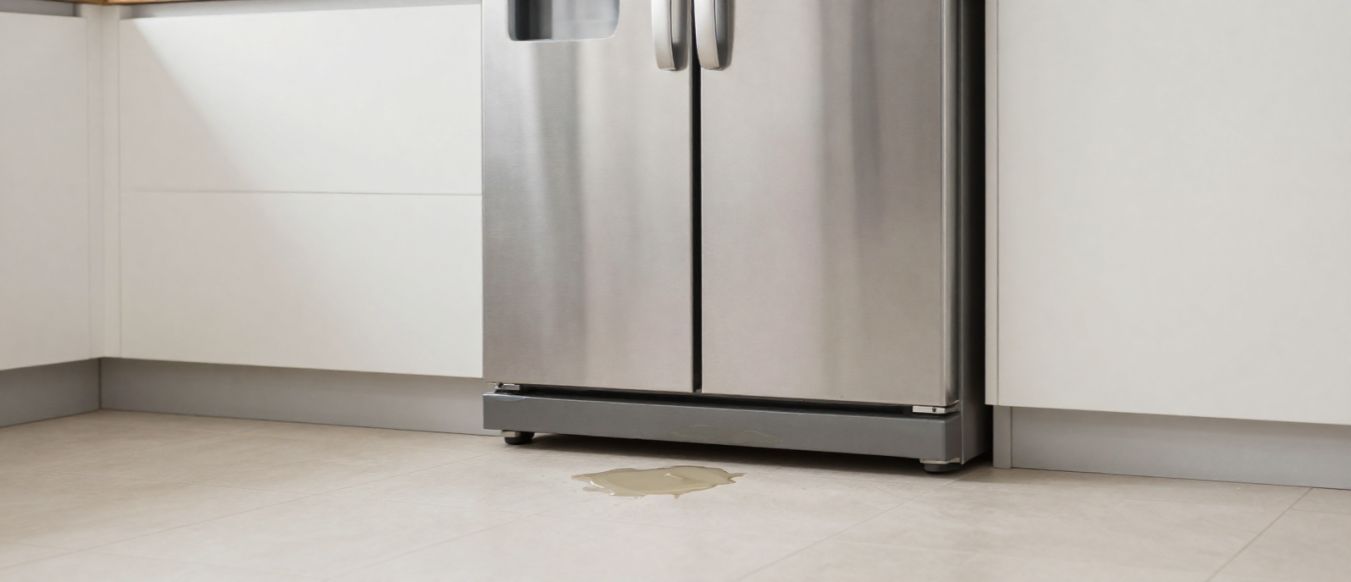
You reach for the milk and it’s a solid block. The lettuce crunches the wrong way, and two eggs have cracked in the carton. If your refrigerator is freezing food, the fridge side is running way colder than it should. It’s a pretty common problem, and the fix is often simple.
Most of the time it comes down to a setting or a blocked vent. Sometimes a part has gone bad, like the thermostat or the air damper. Some of these you can sort out in a few minutes. Others need a technician.
Quick answer: The two most common causes are a temperature setting that’s too low and a damper stuck open. Check the setting first. It only takes a minute.
What Temperature Should a Fridge Be?
The fresh food section should stay between 37°F and 40°F. The freezer should sit at 0°F. Water freezes at 32°F, so food gets close to that line fast when the fridge runs cold. Foods with lots of water in them, like lettuce and milk, freeze first.
A lot of people crank the dial to the coldest level in summer and then forget about it. I’d suggest picking up a cheap fridge thermometer. Put it on the middle shelf, leave it for a day, and then read it. The dial numbers are just levels, so they don’t match real degrees.
Note: Two fridges set to “4” can run at different temperatures. Trust the thermometer, not the dial.
Signs Your Fridge Is Too Cold
Freezing doesn’t always start with a solid block. Small signs usually show up first.
- Ice crystals on lettuce, cucumbers, or other produce
- Slush in your milk or juice
- Cracked eggs
- Frost on the back wall of the fridge
- Drinks on the top shelf turning slushy
If you spot any of these, at least one part of your fridge is dipping below 32°F.
Why Is My Fridge Freezing Everything? Common Causes
Go through these in order. The first few are the quickest to check, and they solve the problem more often than you’d think.
1. The Temperature Setting Is Too Low
This one causes most of the cases. If the dial is at the coldest level, the fridge keeps cooling past the safe point. Turn it up one level. Then leave it alone for 24 hours, because the fridge needs time to settle down.
2. Food Is Blocking the Air Vent
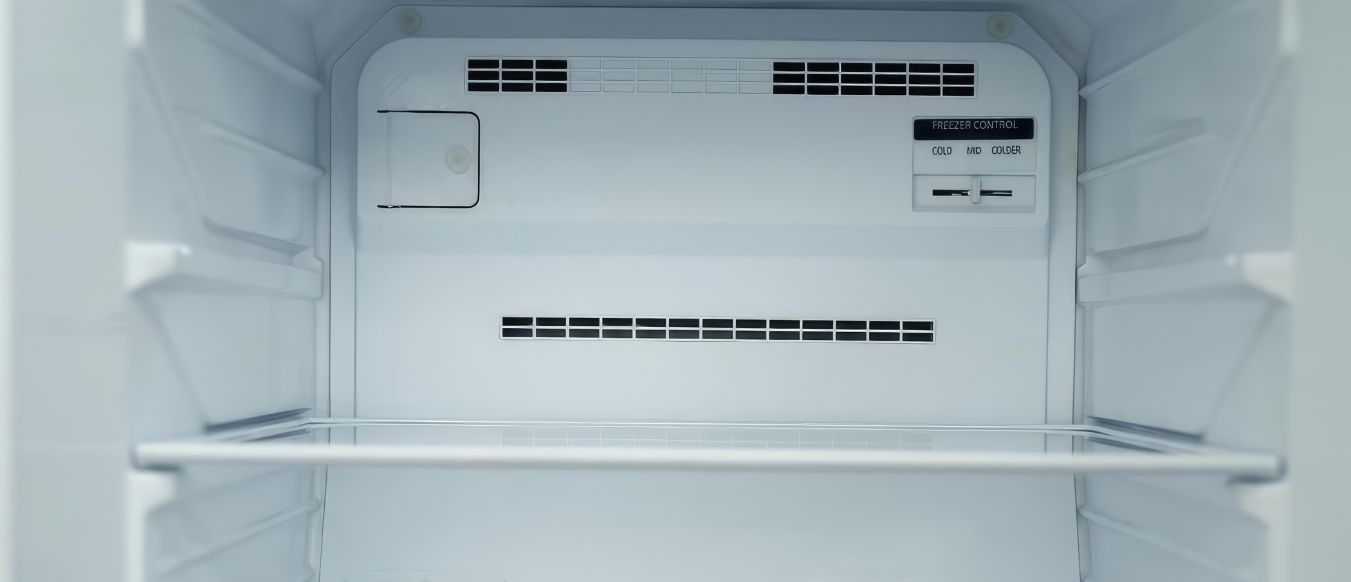
Cold air moves from the freezer into the fridge through a vent, usually at the back or the top. If a jar or a bag of spinach sits right in front of it, that food takes the full blast. It freezes while the rest of the shelf stays fine. Keep things a couple of inches away from the vent.
3. The Shelves Are Packed Too Tight
A full fridge holds its cold well, but a jammed one blocks air flow. Cold air collects in some spots and never reaches others. Leave small gaps between items so the air can move around.
4. The Door Seal Is Damaged
A worn gasket lets warm room air sneak in. The fridge then runs longer to make up for it, and frost can build up near the door. Try the paper test. Shut the door on a sheet of paper and pull it out. If it slides out with no resistance, the seal is weak. Wipe the gasket with warm soapy water first. If it’s cracked or stiff, it needs to be replaced.
5. The Thermostat Is Faulty
The thermostat tells the compressor when to run and when to stop. If it reads the temperature wrong, the compressor keeps going. The fridge gets colder and colder, and food freezes. A multimeter test can confirm it. If electrical parts make you nervous, leave this one to a technician.
6. The Air Damper Is Stuck Open
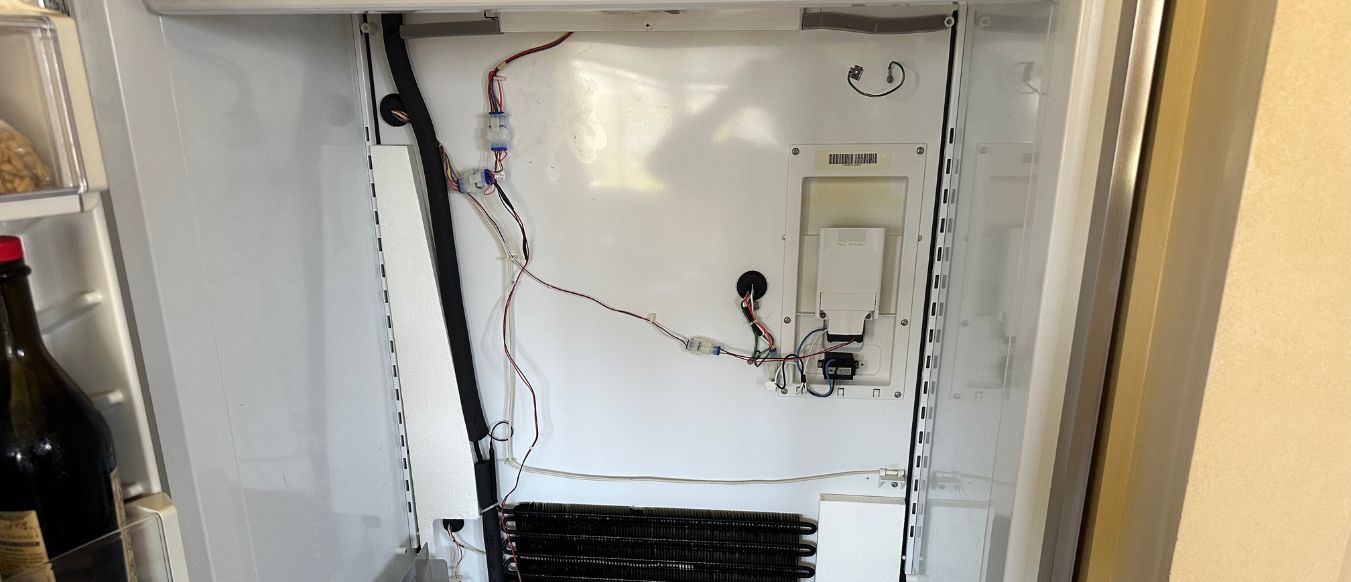
The damper is a small flap that controls how much cold air enters the fridge section. When it sticks open, cold air keeps pouring in. You might see frost near the vent or ice on the back wall. Sometimes ice just jams the flap, and clearing it fixes things. Other times the damper control has to be replaced.
7. The Temperature Sensor or Control Board Has Failed
Newer fridges use a sensor and an electronic control board. If the sensor reads too warm, the board keeps the cooling going. A bad board can cause the same result. Digital models may show an error code, so it’s worth checking the manual. This one is hard to spot without testing tools.
Note: A fridge in a cold garage often has the opposite problem. The compressor runs less, and the freezer can warm up. Your manual lists the room temperature range your model needs.
Causes and Fixes at a Glance
| Cause | Common Sign | Fix |
|---|---|---|
| Setting too low | The whole fridge feels very cold | Raise the setting one level |
| Blocked vent | Food freezes on one shelf or side | Move items away from the vent |
| Packed shelves | Cold spots and warm spots | Remove some items and leave gaps |
| Worn door seal | Frost near the door | Clean the gasket or replace it |
| Bad thermostat | Fridge runs nonstop and gets too cold | Have it tested and replaced |
| Damper stuck open | Ice or frost around the vent | Clear the ice or replace the damper |
| Failed sensor or board | Random freezing or error codes | Call a technician |
Quick Tip: Jot down what you change and the date. If the problem comes back, you'll know what you already tried.
Steps to Fix a Freezing Fridge
Work through these in order. Stop as soon as the problem is gone.
- Check the temperature setting and raise it by one level.
- Put a thermometer on the middle shelf and read it after 24 hours.
- Pull food away from the back wall and the vents.
- Take out a few items so air can move.
- Wipe the door gaskets and do the paper test.
- Look for ice or frost on the vent and the back panel.
- If you find heavy ice on the back wall, move your food to a cooler, unplug the fridge, and let it defrost fully. This can take several hours.
- If food still freezes, have a technician test the thermostat and the damper.
Safety note: Unplug the fridge before you touch anything inside. Never chip at ice with a sharp tool. You could puncture a refrigerant line.
Where to Store Food So It Doesn't Freeze
The spot near the back wall and the vent is usually the coldest part of the fridge. Plan your shelves around that.
- Keep milk, eggs, and yogurt on the middle shelf.
- Keep leafy greens and soft fruit in the crisper drawers.
- Store drinks and sauces in the door, where it’s a bit warmer.
- Put leftovers in the middle, away from the back wall.
- Leave the space around the vents open.
When to Call a Technician
Say you’ve raised the setting, cleared the vents, and checked the seals, and food still freezes. At that point the fault is most likely inside the cooling system. Thermostats, dampers, and control boards need testing with real tools. Guessing at these parts can eat up time and money. Zuta Appliance Repair handles refrigerator repair across the East Bay, including Berkeley and Oakland.
An error code on the display is a clear sign to book a visit. So is a compressor that never shuts off. If your freezer has frost problems too, Zuta also covers freezer repair. With an older fridge, a common rule of thumb is to repair it when it’s under 10 years old and the repair costs less than half the price of a new one.
How to Prevent the Problem
A yearly check is part of preventative maintenance for most kitchen appliances. A few small habits help in between visits.
- Check the temperature with a thermometer every few months.
- Let hot food cool down before it goes in the fridge.
- Clean the door gaskets when you wipe the shelves.
- Keep the fridge away from heat sources like ovens.
- Don’t block the vents with tall containers.
- Level the fridge so the door closes all the way.
Zuta also has a list of refrigerator maintenance tips written for Berkeley homeowners.
Check the Basics Before You Book a Repair
A refrigerator freezing food usually traces back to a low setting or a blocked vent. Both take a few minutes to check and cost you nothing. Once you’ve made a change, a thermometer on the middle shelf will tell you if it worked.
If the problem sticks around, the thermostat or the damper may be the cause. A sensor or control board could also be at fault. Write down what you tried and when, so the technician can start with the facts.
Is your fridge still freezing food after these checks?
Zuta Appliance Repair serves Berkeley and the East Bay and often offers same-day or next-day visits with upfront pricing. Call (415) 592-4633 or send a request through the contact page to book a technician.