If your icemaker has stopped making ice, or it’s making ice that tastes weird, or it’s leaking water all over your freezer floor, you are not alone. This is one of the most common calls that come into appliance repair shops. The good news is that some icemaker problems are simple enough to handle on your own. The bad news is that a few problems can actually make things worse if you try to fix them without the right knowledge.
Here is a rundown of the most common icemaker issues, which ones are worth trying yourself, and which ones you should just hand off to someone who does this for a living.
Common Signs Your Icemaker Is Malfunctioning
Before you decide whether to grab a screwdriver or your phone, it helps to know what kind of problem you are dealing with. Icemakers usually show trouble in a handful of predictable ways.
- No ice production at all, even after 24 hours
- Small or oddly shaped ice cubes
- Ice that tastes or smells off
- Water leaking from the dispenser or inside the freezer
- Loud grinding, clicking, or buzzing noises
- Ice clumping together into one solid block
- The control arm or paddle stuck in one position, or the icemaker acting like the pause command is switched on when it isn’t
Some of these point to something as small as a clogged filter. Others point to a failing water inlet valve, a broken control arm, or a control board that needs replacing, which fall more into the category of signs your icemaker is malfunctioning and needs real attention rather than a quick fix. The trick is figuring out which is which before you start taking things apart.
DIY Fixes You Can Try First
A lot of icemaker issues come down to a handful of simple causes, and most of these can be checked without any tools or repair experience. Before calling anyone, it is worth spending fifteen minutes on these basic checks.
- Check the water supply line: A kinked or frozen line is one of the top reasons an icemaker stops producing ice. Pull the fridge out a bit and look at the line running to the wall valve.
- Inspect the water filter: An old or clogged filter restricts water flow enough to stop ice production. Most manufacturers recommend replacing it every six months.
- Look at the fill tubes: The small tubes that carry water into the ice tray can freeze up or collect debris. Warm water poured slowly over the area usually clears a minor blockage.
- Look at the freezer temperature: Icemakers usually need the freezer at 0 to 5 degrees Fahrenheit to work properly. If it’s running warmer, ice production slows down or stops.
- Check for ice blockages: Sometimes a chunk of ice jams the control arm or blocks the chute. A gentle nudge with a plastic utensil can clear it.
- Confirm the pause command isn’t on: Some icemakers have a pause or vacation setting that gets bumped by accident, and it looks exactly like a dead icemaker until you switch it back.
- Restart the icemaker: Some models have a small on and off switch, or a reset button, that gets bumped accidentally.
- Clean the mold and bin: Mineral buildup or old ice can cause clumping or bad smells. A simple wash with warm water and mild soap usually solves it.
If you go through this list and the icemaker starts working again, great. You just saved yourself a service call. But if none of these fix the problem, or if the issue keeps coming back within a few days, that is usually a sign of something deeper going on inside the unit.
When The Problem Is Bigger Than A Quick Fix
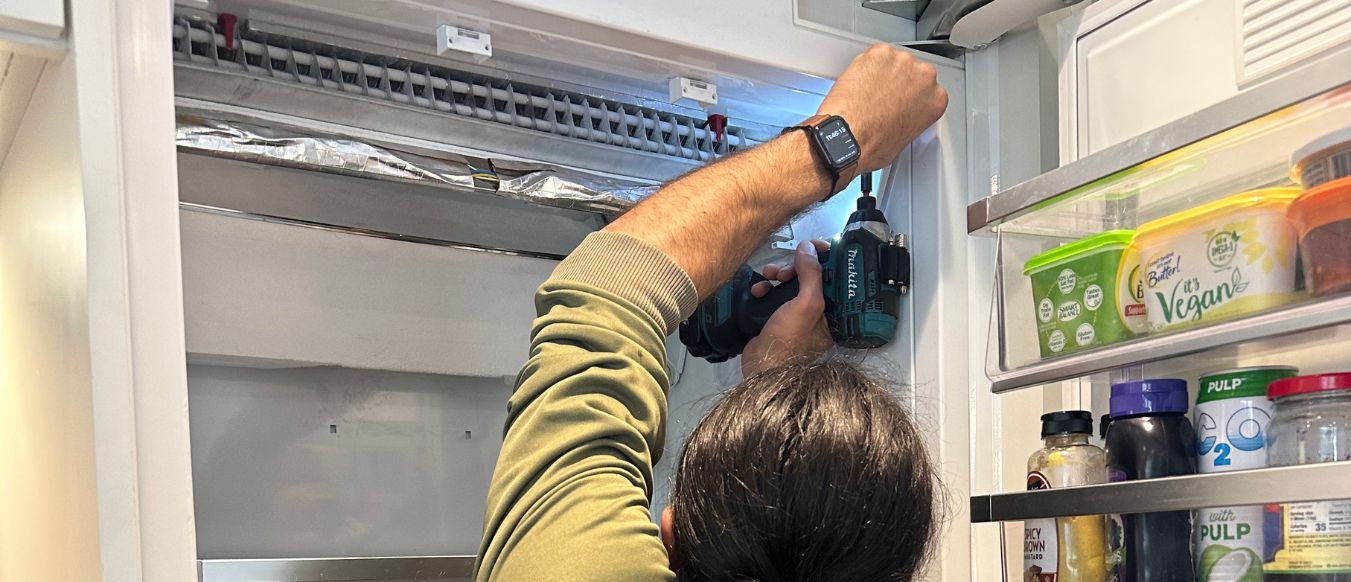
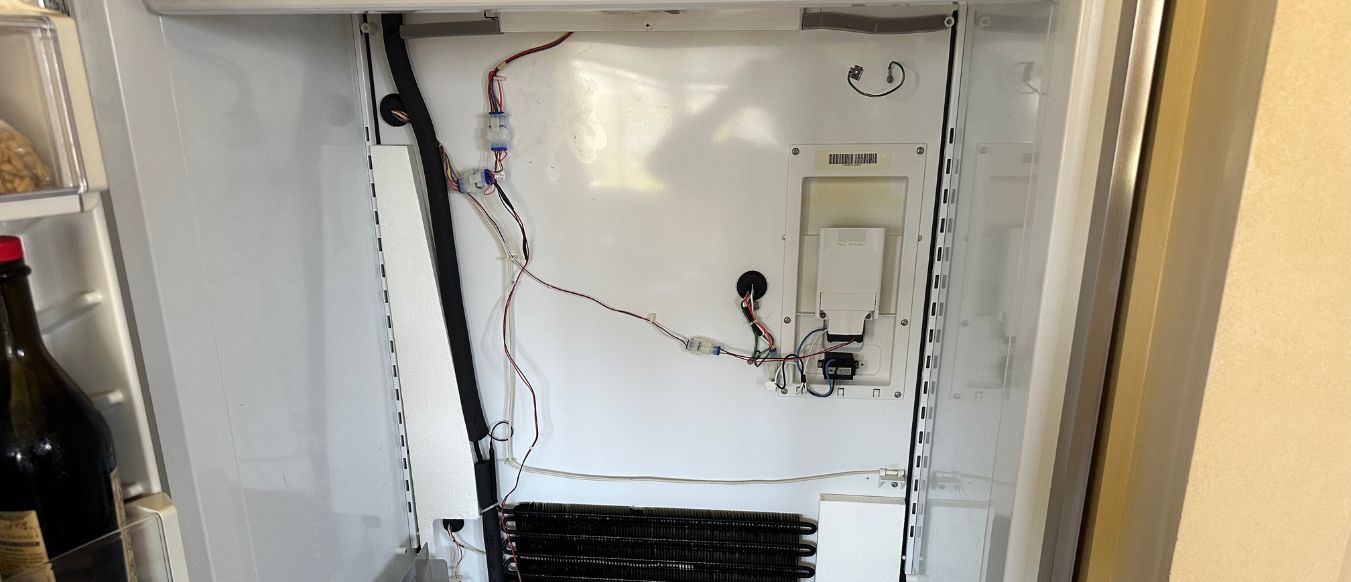
Some icemaker issues are not something you can spot just by looking or listening. These usually involve wiring, the water inlet valve, a heating part that has burned out, or something inside the fridge’s control system. Trying to force these repairs yourself can lead to a bigger bill later, or even damage that wasn’t there before.
Here are situations where it makes more sense to bring in a professional.
| Problem | Why It's Tricky For DIY | What A Technician Does |
|---|---|---|
| Water inlet valve failure | Means opening up water lines and wiring inside the fridge | Tests the valve and checks water pressure |
| Faulty control board | The board runs the whole icemaker, so wiring it wrong can cause more damage | Tests the board and swaps it out if needed |
| Failed heating element | This part helps release the ice, and a burned-out one can look like other problems | Tests the part and replaces it safely |
| Bad thermostat or sensor | Small part that's easy to mix up with a different issue | Compares the sensor reading to the real temperature |
| Leaking inside the wall or floor | Could mean a cracked line you can't see | Checks the full line for cracks or pressure loss |
| Icemaker motor not turning | Usually a wiring problem, not just the motor | Tests the motor and the wiring around it |
| Repeated freezing over of the unit | Often points to a defrost problem elsewhere in the fridge | Checks the defrost timer and heater |
If your icemaker issue falls into any of these categories, it is usually safer and cheaper in the long run to have someone experienced take a look. Buying and swapping the wrong part can end up costing more than the original repair would have.
Weighing Cost, Safety, And Warranty
There are three things worth thinking about before you decide to open up your fridge and start poking around. First is cost. Replacement parts for icemakers are not always cheap, and if you guess wrong on the part, that money is gone. A technician can usually pinpoint the actual failure in one visit instead of you buying parts one at a time hoping something sticks, and for an older unit that keeps acting up, that decision starts to look more like an upgrade or repair question than a simple fix.
The second is safety. Icemakers have water lines and electrical parts sitting close together, which is not a great combination if you don’t have experience with appliance wiring. The third is your warranty. Many manufacturers won’t honor the warranty if someone other than an authorized repair person has opened up the unit, so if your fridge is still under warranty, it is worth checking that before touching anything inside.
A Simple Way To Decide
If you’re still not sure which category your problem falls into, ask yourself these questions.
- Is this something I can see and touch without removing panels? If yes, it’s usually safe to try yourself.
- Does the fix involve water lines, electrical parts, or the control board? If yes, it’s better left to a professional.
- Has the same problem come back after a DIY fix? That usually means the real problem wasn’t actually fixed.
- Is the fridge still under warranty? If so, check the terms before opening anything up.
Most homeowners can comfortably handle filter changes, clearing ice jams, freeing up a stuck control arm, and basic cleaning. Anything involving the water inlet valve, the heating element, wiring, or the control board should go to someone trained to work on it, partly for safety and partly to avoid turning a small issue into a bigger one.
Keeping Your Icemaker From Breaking Down Again
Icemakers, like most appliance parts, last longer with a bit of regular attention. Changing the water filter on schedule and giving the bin an occasional clean go a long way toward avoiding most of the common issues. It also helps to keep an eye on your freezer’s overall performance, since icemaker trouble is sometimes a symptom of a wider cooling problem rather than an issue on its own.
If you notice your freezer struggling to keep a steady temperature, or your fridge’s cooling seems inconsistent, that’s often connected to why the icemaker is acting up in the first place. Staying on top of small maintenance tasks, the kind covered in general appliance preventative maintenance, tends to catch these problems early, before they turn into a full repair visit.
Getting Your Ice Flowing Again Without The Guesswork
Icemaker trouble is annoying, but it rarely means your whole fridge is in danger. Most of the time it’s a filter, a blocked line, or a temperature setting that’s slightly off, and those are things you can check yourself in a few minutes. Once the issue moves into the water inlet valve, control boards, the heating element, or wiring, it’s worth having a second pair of trained eyes look at it before you spend money on parts that might not even be the problem.
If you’ve gone through the basic checks and your icemaker is still acting up, our team at Zuta Appliance Repair handles refrigerator repair across Berkeley and the surrounding East Bay area, and we’re happy to take a look and figure out exactly what’s going on.